
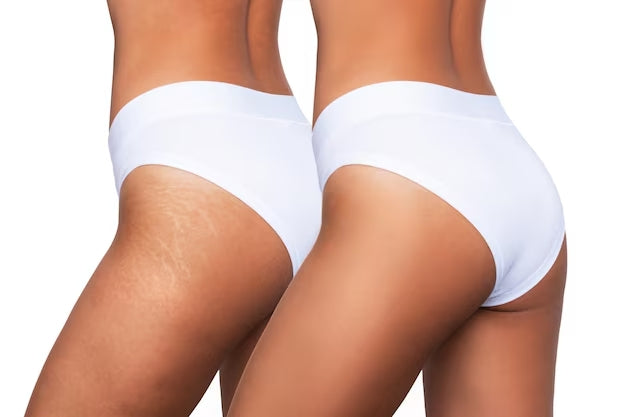
What Are Stretch Marks
Stretch marks, medically known as striae, are a form of dermal scarring that develops when the skin stretches or contracts rapidly. This sudden change disrupts collagen and elastin—two critical proteins responsible for maintaining the skin’s strength and elasticity.
These marks often appear as streaks across the skin, initially red, purple, or dark brown, and gradually fade into lighter tones over time. While completely natural and extremely common, many individuals seek ways to improve their appearance and support skin recovery.
The most common times people experience what are stretch marks concerns include pregnancy, rapid weight changes, puberty, and muscle growth. While they are not harmful, they signal that the skin has undergone structural stress.
For those looking to support skin health at a deeper level, clinically formulated products—like those available at Buni Body — are designed to restore hydration, improve elasticity, and enhance overall skin appearance.
What Causes Stretch Marks
Understanding what causes stretch marks is essential for both prevention and treatment.
Stretch marks occur when the skin is pushed beyond its natural elasticity too quickly. This leads to micro-tears within the dermis, weakening the structural support system of the skin.
Primary causes include:
-
Pregnancy: Rapid abdominal expansion combined with hormonal changes
-
Weight fluctuations: Both gain and loss can stress the skin
-
Puberty: Growth spurts stretch the skin quickly
-
Hormonal changes: Elevated cortisol can reduce skin elasticity
-
Genetics: Some individuals are naturally more prone
Skin that is well-supported—hydrated, nourished, and protected—tends to respond better during these changes. This is where intentional skincare plays a critical role.
How To Prevent Stretch Marks During Pregnancy
A common concern is how to prevent stretch marks during pregnancy. While prevention is not always guaranteed, consistent care can dramatically reduce severity and visibility.
Pregnancy places unique stress on the skin, especially across the abdomen, hips, and breasts. Proactive support is key.
1. Deep Hydration (Non-Negotiable)
Hydrated skin stretches more effectively. Daily application of a rich, nutrient-dense oil or balm helps maintain elasticity.
2. Strengthen Skin Barrier
Look for formulations rich in essential fatty acids and antioxidants. These support collagen function and improve resilience.
3. Consistency Over Intensity
Daily use matters more than occasional application. Think ritual, not reaction.
4. Internal Hydration
Water intake directly impacts skin elasticity and recovery.
5. Gradual Weight Gain
Steady changes reduce stress compared to rapid expansion.
Positioning:
Buni Body Transform is designed as a premium, intentional ritual—supporting the skin during pregnancy with high-quality botanicals that deeply hydrate and reinforce elasticity without irritation.
Can You Get Stretch Marks From Losing Weight
Many people ask: can you get stretch marks from losing weight?
Yes—and it’s more common than most realize.
Stretch marks can form when skin expands during weight gain and then contracts quickly during weight loss. If elasticity is compromised, the skin may not fully rebound, leaving visible lines.
Key drivers include:
-
Rapid weight loss
-
Pre-existing stretch marks
-
Reduced collagen levels
-
Age and skin quality
To minimize risk:
-
Prioritize gradual, sustainable weight loss
-
Maintain a consistent skincare routine
-
Support skin elasticity daily
Topical products that deeply nourish and support collagen function—like Buni Body Transform—can help improve skin recovery and reduce the appearance of marks over time.
How Do You Get Rid Of Stretch Marks
The question how do you get rid of stretch marks is one of the most searched—and often misunderstood.
Stretch marks are a form of scarring, meaning they cannot be completely erased, but their appearance can be significantly improved with the right approach.
1. Targeted Topical Care
High-quality oils and balms can:
-
Improve texture
-
Boost hydration
-
Support collagen remodeling
-
Reduce discoloration
2. Early Intervention
New stretch marks respond better than older ones. The earlier you start, the better the outcome.
3. Clinical Treatments (Optional)
Laser therapy and microneedling can enhance results but are not always necessary when consistent topical care is used.
4. Daily Ritual Matters
Results come from consistency—not quick fixes.
Why Buni Body Transform
Buni Body Transform is positioned as a premium, clinically informed solution for stretch marks and skin recovery.
-
Developed with high-quality, skin-supporting botanicals
-
Designed to deeply hydrate and improve elasticity
-
Supports scar healing and overall skin texture
-
Suitable for pregnancy, postpartum, and weight transitions
This is not just skincare—it’s intentional skin support.
Conclusion
Your skin is adapting. Support it intentionally.
Whether you’re navigating pregnancy, weight changes, or simply investing in your skin long-term, consistency and quality matter.
→ Explore Buni Body Transform today:
https://www.bunibody.com/
Q&A:
What are stretch marks?
What are stretch marks are lines or streaks on the skin caused by rapid stretching that damages collagen and elastin fibers.
What causes stretch marks?
What causes stretch marks includes pregnancy, rapid weight changes, puberty, hormonal shifts, and genetics.
How to prevent stretch marks during pregnancy?
How to prevent stretch marks during pregnancy involves maintaining skin hydration, using targeted topical treatments, and supporting collagen production.
Can you get stretch marks from losing weight?
Yes, can you get stretch marks from losing weight—especially if the weight loss is rapid and the skin lacks elasticity.
How do you get rid of stretch marks?
How do you get rid of stretch marks involves consistent topical care, early treatment, and supporting overall skin health.